Leak detection in Perth is crucial for preventing property damage, ensuring safety, and improving efficiency. Traditional methods, such as visual inspections and acoustic listening devices, are often time-consuming, invasive, and limited in effectiveness. Thermal imaging technology has emerged as a non-invasive and highly efficient solution for detecting water leaks in Perth with precision.
This article explores the science behind thermal imaging, its applications, advantages, and future developments in Perth water leak detection.
The Science Behind Thermal Imaging Technology
Infrared Radiation and Its Role in Leak Detection
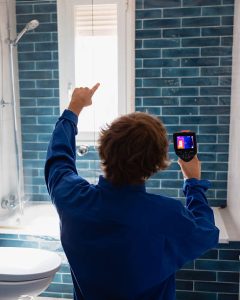
Infrared radiation is a form of electromagnetic energy emitted by objects based on their temperature. Thermal imaging cameras detect this radiation and create a visual representation of temperature variations, allowing professionals to pinpoint leaks without destructive methods.
How Thermal Imaging Cameras Work
Thermal imaging cameras use infrared detectors, often made from microbolometers or cooled infrared sensors, to measure temperature differences. These sensors convert infrared radiation into an electrical signal, producing detailed thermal images that reveal hidden leaks.
Cameras are classified into two types:
- Uncooled Cameras: Cost-effective and durable, commonly used in residential and commercial applications.
- Cooled Cameras: More sensitive, capable of detecting subtle temperature variations, but require higher maintenance and cost.
Interpreting Thermal Images
Thermal imaging cameras utilise various colour palettes (grayscale, iron, rainbow) to represent temperature differences. Adjustable temperature scales and thresholds enhance visibility, allowing professionals to focus on areas of interest and identify anomalies with greater precision.

Types of Leaks Detectable with Thermal Imaging
Water Leaks
- Plumbing Systems: Detecting leaks in concealed pipes, walls, ceilings, and floors without destructive testing.
- Building Envelope Leaks: Identifying roof leaks and window seal failures to prevent water intrusion and structural damage.
Gas Leaks
- Natural Gas & Propane Systems: Detecting leaks quickly to mitigate safety hazards.
- Industrial Applications: Monitoring gas pipelines and storage tanks to prevent environmental risks and operational failures.
Air Leaks
- HVAC Systems: Identifying leaks to optimise system efficiency and reduce energy consumption.
- Building Energy Efficiency: Detecting air infiltration and exfiltration to enhance insulation and energy performance.
Advantages of Thermal Imaging in Leak Detection
- Non-Invasive & Non-Destructive: Detects leaks without damaging structures or requiring disruptive repairs.
- Real-Time Monitoring: Provides immediate analysis, enabling swift identification and intervention.
- High Accuracy & Sensitivity: Detects even minor temperature differences, reducing false alarms.
- Cost-Effective: Lowers long-term maintenance costs by preventing extensive damage and inefficiencies.
Applications of Thermal Imaging Across Industries
Residential
- Home Inspections: Identifying hidden water and air leaks to prevent costly damage and improve efficiency.
- Insurance Claims: Supporting accurate, non-invasive assessments to streamline claim resolutions.
Commercial & Industrial
- Facility Management: Monitoring plumbing, HVAC, and electrical systems to prevent failures and optimise performance.
- Preventive Maintenance: Identifying leaks before they escalate into costly breakdowns.
- Quality Control & Safety: Ensuring operational safety by detecting leaks in equipment and hazardous environments.
Utilities & Infrastructure
- Water & Wastewater Management: Locating leaks in distribution networks to reduce water loss and contamination risks.
- Gas Distribution Networks: Enhancing safety and compliance by monitoring pipelines and storage facilities.
- Power Plants & Substations: Preventing equipment failures by detecting cooling system leaks and electrical faults.
Emerging Applications of Thermal Imaging
- Agriculture: Monitoring irrigation systems and crop health.
- Transportation: Detecting overheating components and structural issues in infrastructure.
- Renewable Energy: Optimising solar panel and wind turbine performance.
- Wildlife Conservation: Tracking animal populations and monitoring ecosystems.
- Smart Cities: Enhancing infrastructure monitoring for sustainable urban development.
Conclusion
Thermal imaging technology has transformed leak detection by offering a non-invasive, accurate, and efficient solution. Its applications across residential, commercial, and industrial sectors make it an indispensable tool for maintenance and sustainability. As advancements in thermal imaging continue, its potential will expand further, contributing to safer, more efficient, and environmentally responsible leak detection practices.
By embracing this innovative technology, we can ensure improved safety, reduced costs, and a more sustainable future.
In an era where water conservation and sustainability are priorities, Wizard Leak Detection has positioned itself at the forefront of the industry by leveraging advanced technology. Our expertise in detecting hidden leaks helps prevent costly damages, protect properties, and contribute to environmental sustainability.
At Wizard Leak Detection, we recognise that leaks can cause structural damage, disrupt operations, and lead to unnecessary waste. That is why we are committed to providing accurate and reliable leak detection services in Perth, empowering our clients to address potential issues proactively and efficiently.